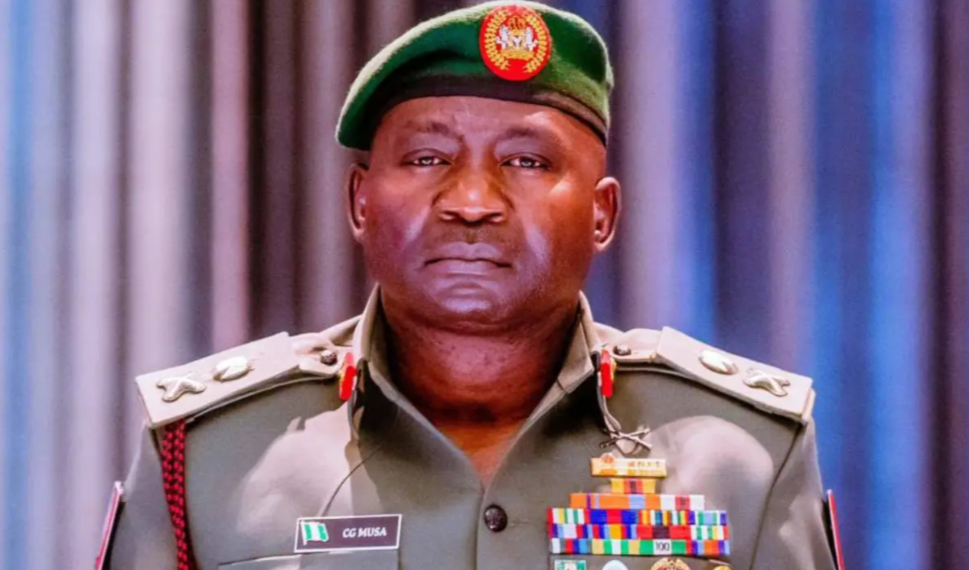
Nigeria’s Chief of Defence Staff, General Christopher Musa, caused quite a stir when he urged citizens to learn combat skills as a means of self-defense, saying the world is simply too dangerous to leave safety solely to security forces.
During an appearance on Channels Television’s Politics Today, General Musa likened the importance of combat training to basic survival skills like driving and swimming.
He asserted that, like swimming in Europe, security education should also be compulsory.
He called on the National Youth Service Corps (NYSC) to include unarmed combat training in its curriculum, saying that the current three-week program has been “watered down” and should instead equip graduates to protect themselves from violent individuals.
Emphasizing the citizen’s role in national safety, General Musa urged Nigerians to develop situational awareness, stay vigilant, and report suspicious activity in their communities.
Public reaction to the proposal has been divided. Supporters describe it as both pragmatic and timely. The Human Rights Writers Association of Nigeria (HURIWA) praised the idea of structured, community-led defense — particularly in conflict-prone areas like Benue — calling it “people-driven” and “long overdue.”
Many Nigerians on social media echoed this sentiment, suggesting that self-defense training should even be incorporated into schools and NYSC camps as a preventive measure, rather than a shift in responsibility.
However, critics have raised concerns about the potential for increased vigilantism and civil unrest if untrained civilians begin taking up arms in defense. Others viewed the proposal as a troubling acknowledgment that the military can no longer fully ensure public safety — effectively shifting the burden of protection onto ordinary citizens.
This isn’t the first time General Musa has emphasized collective responsibility. His broader leadership efforts include community outreach—like building schools and healthcare facilities—and strengthening civil-military relations, especially in insecure regions.
General Musa’s message is bold: security should not be passive—it’s a shared duty. Whether you view his statement as encouragement for empowerment or a shift of undue responsibility, it undeniably sparks debate.
Now over to you: Is it time for Nigerians to learn combat skills for their own protection, or should the military—and only the military—shoulder that burden?