Trump Says U.S Needs ‘Department of War’ Not Defense

In a bold and provocatively nostalgic move, President Donald Trump announced on Monday his intention to rename the U.S. Department of Defense back to its historical title, the “Department of War.”
The president argued that the term “Defense” sounds overly passive and doesn’t reflect the offensive posture he believes America should adopt. He reminisced about the earlier name’s association with historic military victories, including World Wars I and II, saying: “As Department of War, we won everything,” and “Defense is too defensive. We want to be defensive, but we want to be offensive, too, if we have to be.”
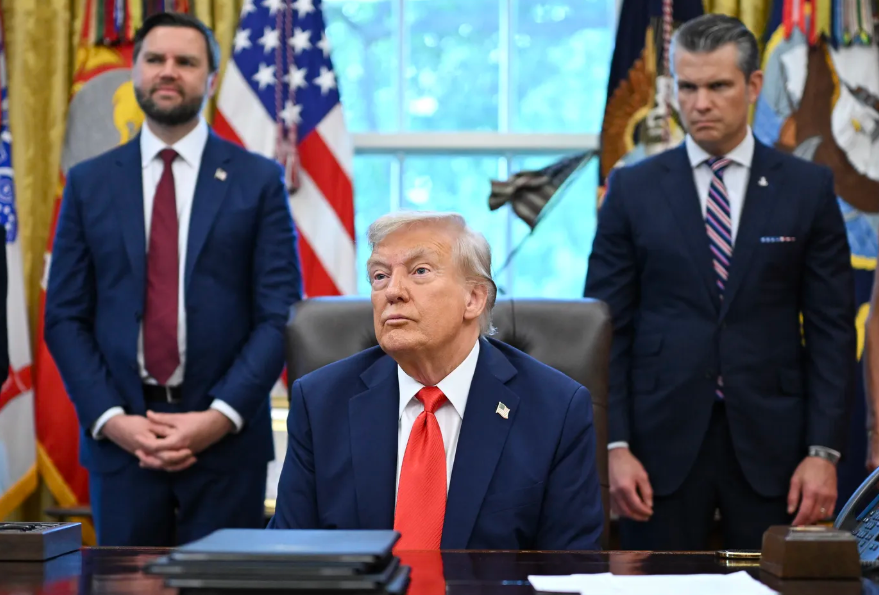
Trump raised the issue during an Oval Office meeting with Defense Secretary Pete Hegseth, who responded with a hint of approval—even teasing that a name change was “coming.” Later, during a joint appearance with South Korean President Lee Jae Myung, Trump reiterated his sentiment: the original name had greater resonance and strength. He suggested that “everybody likes” reverting to the “Department of War,” and hinted at a formal announcement within the week.
Historians note that the original “War Department” was established in 1789 and managed Army operations until 1947. The National Security Act of that year reorganized the military—splitting the War Department into separate Army and Air Force departments, and unifying them with the Navy under the newly formed National Military Establishment. In 1949, the agency was officially renamed the Department of Defense to emphasize a coordinated, defensive stance in the early Cold War era.
Legal experts point out that renaming a federal Cabinet agency would require congressional authorization. Trump, however, appeared to downplay the need for legislative action, stating, “We’re just going to do it. I’m sure Congress will go along if we need that.”
Beyond this symbolic shift, the proposal aligns with Trump’s broader strategy to reshape the nation’s military posture through strong rhetoric and institutional rebranding. Critics argue that such gestures serve as theatrical messaging rather than substantive policy, while proponents see them as restoring confidence in U.S. military power.
You May Also Like
Morgan DMW Blasts VeryDarkMan Over Lies in WhatsApp Evidence Amid Mohbad Case

September 16, 2025
First Lady Oluremi Tinubu Asks Nigerians to Turn Birthday Gifts into Donations for National Library

September 2, 2025